Transforming your viewing experience starts with the right foundation, and for many, that means embracing the sleek, space-saving power of a 40 inch TV wall mount. As someone who’s spent over 15 years knee-deep in TV installation, I can tell you there’s a world of difference between merely hanging your TV and truly integrating it into your home. A 40-inch TV is a fantastic size for many rooms, offering a great balance between immersive viewing and fitting comfortably into smaller or medium-sized spaces. Getting it off the stand and onto the wall instantly declutters your area, making your room feel more open and modern.
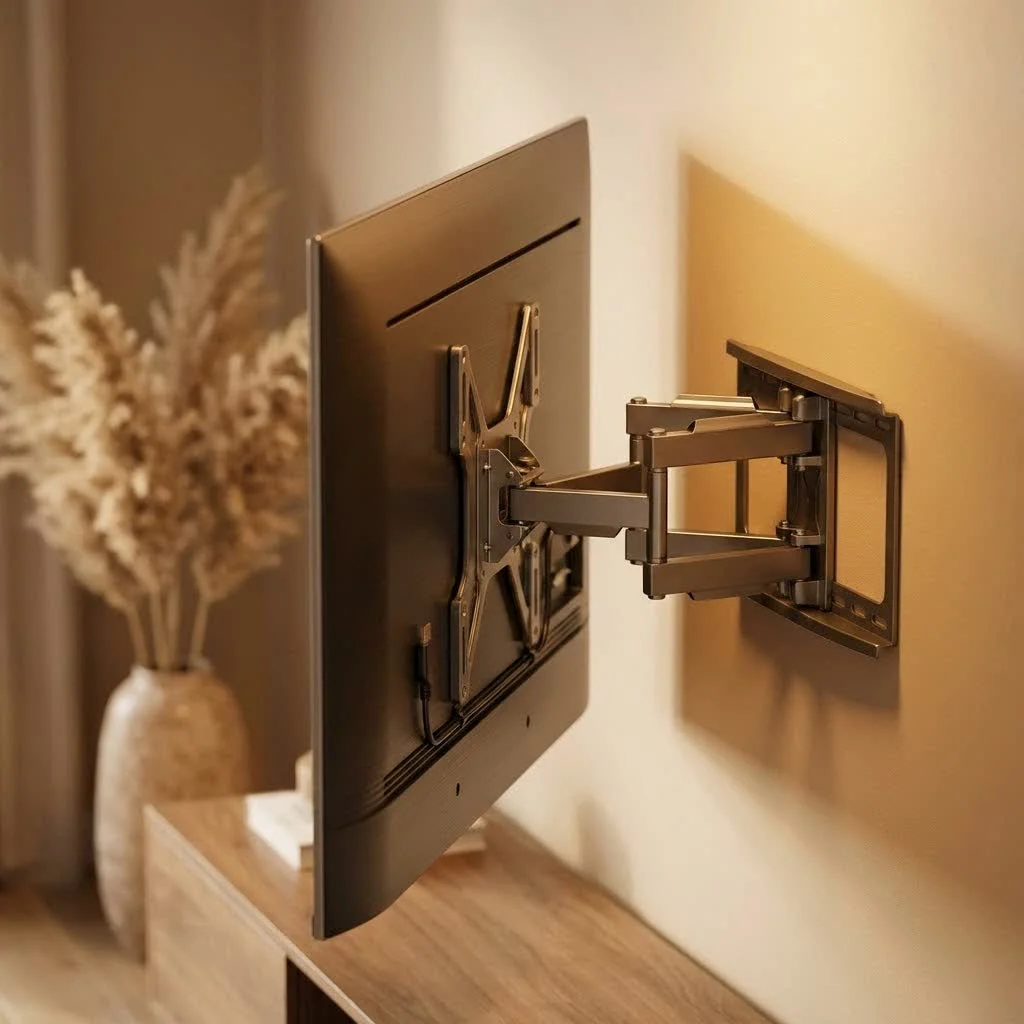
But it’s not just about aesthetics; a properly installed 40 inch TV wall mount also optimizes your viewing angles, reduces glare, and keeps your precious screen safe from accidental bumps and knocks. If you’re ready to elevate your home entertainment, let’s dive into everything you need to know to make the smartest choices and get that 40-inch TV perfectly mounted.
Why Wall Mount Your 40-Inch TV?
You might be thinking, “My TV stand works just fine, why bother with a wall mount?” Well, think of it this way: a wall mount is like giving your TV a dedicated, elevated stage. It’s about more than just saving space; it’s about creating a streamlined, modern look that enhances your entire room. When your 40-inch TV is mounted, it frees up valuable surface area on your media console, which can then be used for decor, a soundbar, or simply kept clear for a minimalist vibe. This also improves the overall safety, especially if you have pets or small children, by keeping the TV out of harm’s way. Plus, with the right 40 inch TV wall mount, you can achieve optimal viewing angles from anywhere in the room, making every seat the best seat in the house.
Understanding 40-Inch TV Wall Mount Types
Before you even think about drilling, understanding the different types of 40 inch TV wall mount options available is crucial. Each serves a different purpose, and choosing the right one for your space and viewing habits is key to your satisfaction.
Fixed (Low-Profile) Mounts
These mounts keep your 40-inch TV flat against the wall, offering the most discreet and sleek look. They’re perfect if you primarily watch TV from a consistent, head-on angle and want your display to blend seamlessly into your room’s decor. The distance between your TV and the wall can be as minimal as 0.5 inches, giving it that “picture frame” aesthetic. The downside? No adjustability once it’s up.
Tilting Mounts
|
Our Picks for the Best TV Mount in 2026
As an Amazon Associate I earn from qualifying purchases.
|
||
| Num | Product | Action |
|---|---|---|
| 1 | Pipishell Full Motion TV Wall Mount for Echo Show 21/15 and 13-43 Inch Flat Curved Screen TVs & Monitors, Max VESA 200x200mm up to 44lbs, TV Mount Wall Bracket with Rotation Swivel Tilt Extension |

|
| 2 | Perlegear Full Motion TV Wall Mount for Most 42–86 inch Flat Curved TVs up to 132 lbs, 12″/16″ Wood Studs, Bracket with Articulating Arms, Swivel, Tool-Free Tilt, Max VESA 600x400mm PGLF12 |
|
| 3 | USX MOUNT Full Motion TV Wall Mount for Most 32-70 inch TVs up to 99 lbs, Wall Mount Bracket with Dual Articulating Arms, Swivel, Tilt, Max VESA 400x400mm, TV Mount Fits 12”/16” Wood Studs |
|
| 4 | Magnetic Monitor Wall Mount for Steel Surfaces, Fits 13 to 34 Inch Screens, Holds up to 22 lbs, VESA 75/100 Compatible Wall Mount for Computer and TV Monitor, No-Drill Installation with All Screws |
|
| 5 | Amazon Basics Full Motion Articulating TV Wall Mount, with Swivel and Tilt, for 26\" to 55\" TVs and Flat Panels up to 80 Lbs, VESA Compatible, Black |
|
| 6 | monTEK Motorized Ceiling TV Mount for 43-86 Inch TVs, Heavy-Duty 121lbs (4X Load Tested), Off-Center VESA Compatible, Electric Flip Down with Remote/App/Voice Control, Fits Flat & Pitched Roof |
|
| 7 | USX Mount Full Motion TV Wall Mount for Most 42-90 inch Flat Screen/LED/4K, TV Mount Bracket Dual Swivel Articulating Tilt 6 Arms, Max 16\" Wood Studs, VESA 600x400mm, Holds up to 132lbs |
|
| 8 | MOUNTUP Full Motion TV Wall Mount for Most 26-60 Inch TVs, Max VESA 400x400mm Wall Mount TV Bracket with Swivel Tilting Extension Level Adjustment for LED LCD Flat Curved TVs Up to 77 LBS, MU0018 |
|
| 9 | Mounting Dream TV Wall Mount for Most 37-75 Inch TVs, Universal Tilt TV Mount Fit 16\", 18\", 24\" Stud with Loading Capacity 132lbs, Max Vesa 600 x 400mm, Low Profile Flat Wall Mount TV Bracket |
|
| 10 | Mounting Dream TV Wall Mount for 32-65 Inch Television,Mount with Swivel and Tilt, Full Motion Bracket with Articulating Dual Arms, Fits 16inch Studs, Max VESA 400X400 mm, 99lbs, MD2380 |
|
A step up from fixed mounts, tilting options allow you to adjust your 40-inch TV’s vertical angle, typically up to 15-20 degrees downwards. This is incredibly useful for reducing glare from windows or overhead lighting, or if your TV is mounted a bit higher than eye level, perhaps above a fireplace (though we generally advise against mounting too high!). You get better viewing comfort without sacrificing too much of that low-profile look.
Full-Motion (Articulating) Mounts
For ultimate flexibility, a full-motion 40 inch TV wall mount is your best friend. These mounts come with an arm (or arms) that allow you to extend your TV out from the wall, swivel it horizontally, and tilt it vertically. They’re ideal for open-concept living spaces, corner installations, or rooms where you need to view the TV from multiple angles, like watching the game from the kitchen. Some can even extend up to 40 inches from the wall, offering incredible versatility.
“Choosing the right mount type for your 40-inch TV isn’t just about functionality; it’s about defining your viewing experience. A fixed mount screams minimalist chic, while a full-motion mount gives you dynamic control. Always consider your lifestyle and room dynamics first,” advises Dikfu.com’s lead installer, Alex Petrov.
Key Considerations for Selecting the Perfect 40-Inch TV Wall Mount
Now that you know the types, let’s talk about the critical factors to consider when choosing a 40 inch TV wall mount. These aren’t just recommendations; they’re non-negotiables for a safe and satisfying installation.
VESA Compatibility: The Universal Language of TV Mounts
This is paramount. VESA (Video Electronics Standards Association) is a set of standards for mounting interfaces on the back of TVs. You’ll see measurements like 100x100mm, 200x200mm, or 400x400mm. These numbers refer to the horizontal and vertical distance between the threaded mounting holes on the back of your TV. Your 40 inch TV wall mount must have a matching or compatible VESA pattern. Check your TV’s manual or measure the holes yourself. Many universal mounts accommodate a range of VESA patterns, but always double-check.
Weight Capacity: Don’t Underestimate the Load
Every 40 inch TV wall mount has a specified maximum weight capacity. While modern 40-inch TVs are relatively lightweight, usually between 20-35 pounds, it’s crucial to select a mount rated to hold at least your TV’s weight, plus a safety margin. Most mounts for this size TV can easily support 50-110 lbs (25-50 kg), providing ample security. Ignoring this can lead to catastrophic failure.
Your Wall Type: A Foundation for Safety
The type of wall you’re mounting to dictates the hardware and installation technique.
- Wood Stud Walls: The most common and secure option. You’ll need to locate the wooden studs behind your drywall and anchor the mount directly into them using lag bolts. Studs are typically spaced 16 or 24 inches apart.
- Concrete or Brick Walls: These require specialized concrete anchors and a powerful rotary hammer drill. Installation can be more involved but is very secure.
- Drywall (without studs): This is generally NOT recommended for direct TV mounting. Drywall alone cannot support the weight of a TV. If you absolutely cannot hit a stud, you must use heavy-duty toggle bolts or specialized drywall anchors specifically designed for heavy loads. Even then, professional installation is strongly advised.
Viewing Habits & Room Layout: Tailoring the Experience
- Seating Arrangement: Do you have one main seating area or multiple? This will influence whether a fixed, tilting, or full-motion mount is best.
- Room Size: A fixed mount is great for smaller rooms with a direct line of sight, while a full-motion mount shines in larger, open spaces or corner installations where you need to pull the TV out and angle it.
- Lighting: If your room gets a lot of natural light or has overhead fixtures, a tilting or full-motion mount can help combat glare.
Essential Tools You’ll Need for the Job
Before you embark on your installation journey for your 40 inch TV wall mount, gather these trusty tools:
- Stud Finder: Absolutely essential for locating wood or metal studs.
- Power Drill: For drilling pilot holes. Make sure you have the correct drill bit sizes for your wall type and lag bolts.
- Level: A good spirit level (or laser level for extra precision) is non-negotiable for a perfectly straight TV. Nobody wants a crooked TV!
- Measuring Tape: For precise measurements of height, center, and VESA patterns.
- Pencil: For marking drill points and outlines.
- Socket Wrench/Adjustable Wrench: For tightening lag bolts and other hardware.
- Screwdrivers: Philips head and flathead for various screws.
- Safety Glasses: Protect your eyes from dust and debris.
- Painter’s Tape: Useful for marking and holding templates.
- A Trusty Assistant: Seriously, never try to mount a TV by yourself. An extra pair of hands is a must for lifting and holding.
Step-by-Step Guide to Safely Installing Your 40-Inch TV Wall Mount
Ready? Let’s get that 40-inch TV securely mounted to your wall. Remember, patience and precision are your best friends here.
1. Preparation is Key: A Smooth Start
Unbox your 40 inch TV wall mount and lay out all the components. Read through the manufacturer’s instructions carefully, even if you’re an experienced DIYer. Every mount can have slight variations. Also, take this time to attach the TV mounting arms to the back of your TV (if they’re separate components). This “dry run” helps you understand the connections and prevents fumbling when the TV is already on the wall. Ensure you use the correct VESA screws and spacers provided.
2. Finding the Sweet Spot: Location and Height
This is where your viewing comfort comes into play. The general rule of thumb is that the center of your 40-inch TV screen should be at eye level when you are comfortably seated. For most living rooms, this translates to about 42-48 inches from the floor to the center of the screen. If it’s for a bedroom where you’ll be lying down, you might want it slightly higher, around 50 inches to the center. Use painter’s tape to create a TV-sized outline on your wall and test different heights and locations from your seating positions. This helps visualize and confirm the best spot. Also, consider the viewing distance; for a 40-inch TV, aim for a distance of approximately 5-8 feet for optimal immersion.
3. Locating Wall Studs: The Backbone of Your Mount
This is the most critical safety step. Using your stud finder, scan the wall horizontally to locate the edges of at least two adjacent studs where your mount will be positioned. Mark the center of each stud with a pencil. Why studs? Because drywall alone won’t safely support your 40-inch TV, no matter how light it is. For brick or concrete walls, plan to drill into the solid material, not the mortar.
4. Marking and Drilling Pilot Holes: Precision Matters
Hold the wall plate of your 40 inch TV wall mount against the wall, aligning its center with your desired TV center and ensuring the mounting holes are directly over the marked stud centers. Use your level to ensure it’s perfectly straight, then mark the exact locations for your pilot holes. Now, using your power drill with the correct drill bit (usually a slightly smaller diameter than your lag bolts for wood studs, or appropriate for concrete anchors), drill your pilot holes. Go deep enough for the entire length of the lag bolt.
5. Attaching the Wall Plate: Securing the Foundation
With the pilot holes drilled, position the wall plate over the holes and insert the lag bolts with washers. Use your socket wrench or power drill (on a low torque setting to avoid stripping) to securely fasten the wall plate to the studs. Tighten them firmly, but be careful not to overtighten, which can damage the stud or the mount. Use your level one last time to confirm it’s still perfectly straight.
6. Mounting Arms to Your TV: The Connection
If you haven’t already, attach the vertical mounting arms (often called TV brackets) to the back of your 40-inch TV. These arms usually align with the VESA holes. Use the correct screws and spacers (if needed) to ensure a secure, flush fit without overtightening and damaging your TV’s internal components. Pay attention to the orientation; typically, these arms have a hook or a larger opening at the bottom to facilitate hanging.
7. Hanging Your TV: The Moment of Truth
With your assistant, carefully lift your 40-inch TV and align the mounting arms on the back of the TV with the wall plate. Gently lower the TV onto the mount, ensuring the arms securely hook onto the wall plate. You’ll often hear a click or feel it seat properly. Double-check that both sides are engaged and the TV feels stable.
8. Final Adjustments and Security: Lock It In
Most 40 inch TV wall mounts have locking screws or safety straps to secure the TV to the wall plate, preventing it from being accidentally knocked off. Engage these safety features. If your mount allows for tilt or swivel, make your final adjustments to achieve the perfect viewing angle. Use your level one last time to confirm everything is perfectly horizontal.
Beyond Installation: Cable Management and Aesthetic Touches
A beautifully mounted 40-inch TV can quickly lose its appeal if messy cables are dangling beneath it. Here’s how to keep things tidy:
- In-Wall Cable Management: For the cleanest look, you can route cables directly through the wall. This often involves installing recessed outlet boxes and cable pass-through plates. Important: Always consult a professional electrician for power cable relocation to ensure compliance with electrical codes and safety.
- Cable Concealers/Raceways: These are channels that attach to your wall and neatly hide cables. They can be painted to match your wall color for a discreet finish.
- Cable Sleeves & Ties: For short runs or where cables can’t be fully hidden, sleeves and ties keep them bundled and organized, minimizing visual clutter.
Common Mistakes to Avoid When Installing Your 40-Inch TV Wall Mount
Even with the best intentions, mistakes happen. As a seasoned professional, I’ve seen them all. Here’s what to watch out for:
- Ignoring VESA & Weight Specs: This is a recipe for disaster. Always match your TV’s VESA pattern and ensure the mount can handle its weight.
- Skipping Studs or Using Wrong Anchors: Mounting directly into drywall without proper stud support or heavy-duty anchors is a critical safety hazard. Your TV will eventually fall.
- Mounting at the Wrong Height: A TV mounted too high causes neck strain and looks awkward. Aim for eye-level to the center of the screen when seated.
- Forgetting About Cable Access: Plan your cable routing before you mount the TV. There’s nothing worse than getting your TV up only to realize you can’t plug in your devices or hide the wires.
- Not Using a Level: Even a slight tilt will become incredibly annoying once your TV is up. Use a level at every marking and installation step.
- Overlooking Manufacturer Instructions: These manuals contain crucial, model-specific details and safety warnings. Don’t assume you know it all.
- Using Inadequate Tools or Mismatched Screws: The right tools make the job safer and easier. Using the wrong screws for your wall type can lead to a weak and dangerous installation.
- Trying to DIY Alone: Always have an assistant, especially for lifting the TV. It’s safer and prevents damage to both you and your TV.
Frequently Asked Questions (FAQ)
Q: Can I mount a 40-inch TV on drywall without studs?
A: Generally, no. Drywall alone is not strong enough to securely hold the weight of most TVs, including a 40-inch model. It is crucial to anchor your 40 inch TV wall mount into solid wood studs or use specialized heavy-duty toggle anchors designed for drywall, ideally with professional consultation for safety.
Q: What VESA size should I look for for a 40-inch TV?
A: For a 40-inch TV, common VESA patterns can vary, but you might typically find patterns like 200x200mm, 300x200mm, or 400x200mm. It’s essential to check your specific TV’s manual or measure the horizontal and vertical distances between the four mounting holes on the back of your TV to find its exact VESA standard.
Q: How high should I mount my 40-inch TV?
A: The ideal height for a 40-inch TV is typically where the center of the screen is at eye level when you are comfortably seated. For most living room setups, this is usually between 42 to 48 inches from the floor to the center of the TV. For bedrooms, it might be slightly higher to accommodate viewing from a bed.
Q: Do all 40-inch TV wall mounts come with all necessary hardware?
A: Most 40 inch TV wall mount kits come with a variety of screws, spacers, and bolts to fit different TV models and common wall types (wood studs, concrete). However, always double-check the contents against your TV’s requirements and your specific wall type to ensure you have everything, or if you need to purchase specialized anchors.
Q: How do I hide the cables after mounting my 40-inch TV?
A: There are several ways to hide cables after installing your 40 inch TV wall mount. You can use in-wall cable management kits for a seamless look, external cable raceways that can be painted to blend with your wall, or simple cable ties and sleeves to bundle them neatly behind the TV and stand.
Conclusion
Mounting your 40-inch TV is a fantastic way to enhance your home, creating a cleaner, more organized, and aesthetically pleasing entertainment space. By understanding the different types of 40 inch TV wall mount options, carefully considering VESA compatibility and weight capacity, properly locating wall studs, and following a methodical installation process, you can achieve a secure and professional setup. Remember, safety always comes first, so never rush the process or cut corners. Take your time, get that extra set of hands, and soon you’ll be enjoying your favorite shows and movies from the perfect vantage point. At Dikfu.com, our goal is to empower you with the knowledge to tackle these projects confidently and safely. Happy mounting!
Get our weekly buyer guide
Practical specs, not advice. Unsubscribe anytime.