Tired of bulky TV stands cluttering your living space? Dreaming of a minimalist, cinema-like experience in your own home? A fixed TV wall mount is often the perfect solution, offering a clean aesthetic, enhanced safety, and an optimal viewing angle for dedicated spaces. As an expert with over 15 years in TV mount installations and the lead content creator for Dikfu.com, I’ve seen firsthand how choosing the right mount can transform a room. This guide will walk you through everything you need to know about fixed TV wall mounts, from selecting the perfect one to a safe, professional installation.
What Exactly is a Fixed TV Wall Mount?
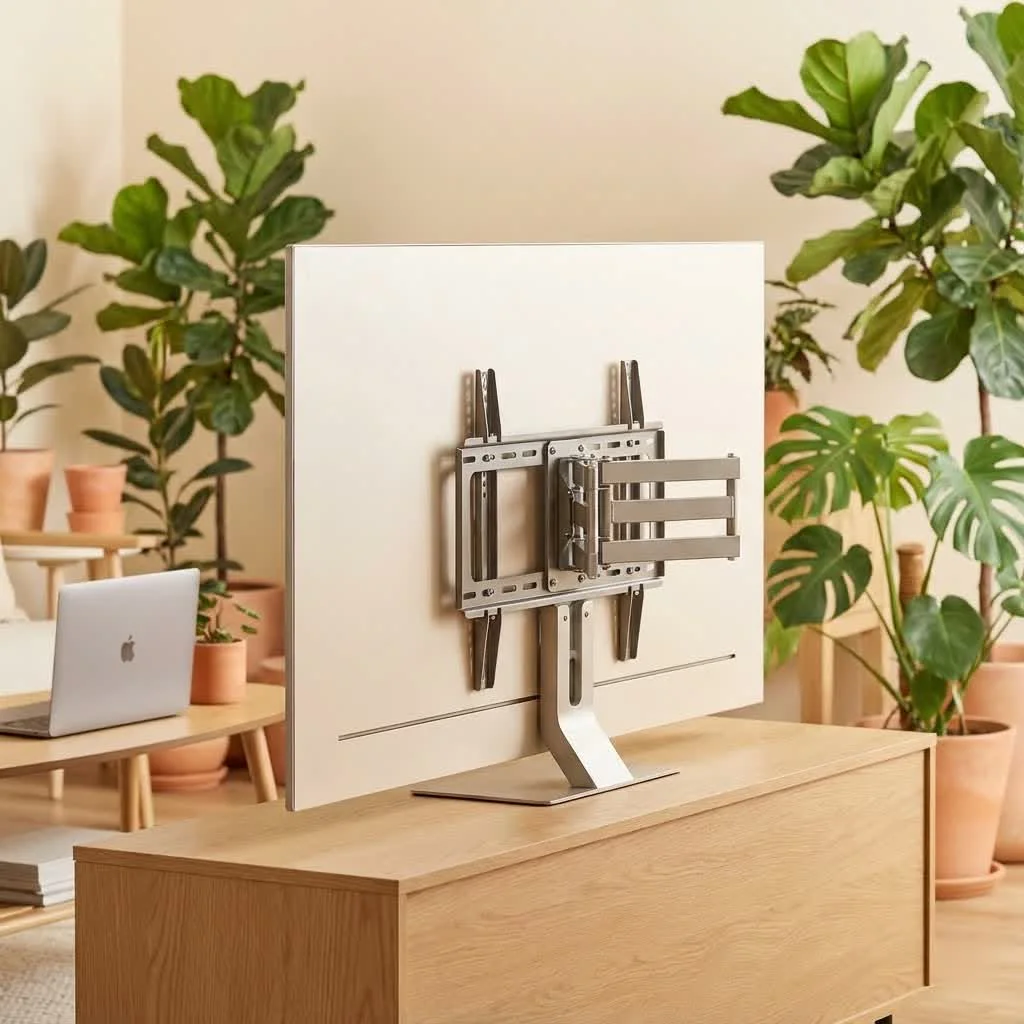
At its core, a fixed TV wall mount is a stationary bracket designed to hold your television securely and as close as possible to the wall. Unlike tilting, swivel, or full-motion mounts, a fixed mount offers no adjustability once installed. Your TV remains in one “fixed” position, making it ideal for rooms where your primary viewing spot is directly in front of the screen, such as a dedicated home theater, a bedroom, or a living room where furniture arrangements are static. The beauty of a fixed mount lies in its simplicity and its ability to deliver an ultra-low profile, making your TV appear almost like a piece of art flush against the wall. For expert tv mounts reviews on this site.
Why Choose a Fixed Mount? The Undeniable Advantages
Opting for a fixed TV wall mount brings a host of benefits that go beyond just holding your TV. It’s about optimizing your living space, enhancing safety, and achieving a sophisticated look.
Achieve a Seamless, Ultra-Low Profile Aesthetic
One of the most compelling reasons to choose a fixed mount is its ability to create an incredibly sleek and modern appearance. By eliminating the gap often seen with other mount types, your TV sits much closer to the wall, sometimes just an inch or less. This minimalist design helps to declutter your entertainment area, making the room feel more spacious and organized. It transforms your television from a piece of electronics into an integrated design element.
Superior Safety and Stability for Your Home
Safety is paramount, especially in households with children or pets. A TV mounted securely to the wall significantly reduces the risk of accidental tip-overs, which can lead to serious injuries or costly damage to your television. Fixed mounts, by their very nature, offer immense stability. Once properly installed into wall studs or appropriate anchoring points, they create a robust and dependable foundation for your screen, providing peace of mind.
Maximize Your Space and Viewing Experience
|
Our Picks for the Best TV Mount in 2026
As an Amazon Associate I earn from qualifying purchases.
|
||
| Num | Product | Action |
|---|---|---|
| 1 | monTEK Motorized Ceiling TV Mount for 43-86 Inch TVs, Heavy-Duty 121lbs (4X Load Tested), Off-Center VESA Compatible, Electric Flip Down with Remote/App/Voice Control, Fits Flat & Pitched Roof |

|
| 2 | MOUNTUP Full Motion TV Wall Mount for Most 26-60 Inch TVs, Max VESA 400x400mm Wall Mount TV Bracket with Swivel Tilting Extension Level Adjustment for LED LCD Flat Curved TVs Up to 77 LBS, MU0018 |
|
| 3 | USX MOUNT Full Motion TV Wall Mount for Most 32-70 inch TVs up to 99 lbs, Wall Mount Bracket with Dual Articulating Arms, Swivel, Tilt, Max VESA 400x400mm, TV Mount Fits 12”/16” Wood Studs |
|
| 4 | Mounting Dream TV Wall Mount for 32-65 Inch Television,Mount with Swivel and Tilt, Full Motion Bracket with Articulating Dual Arms, Fits 16inch Studs, Max VESA 400X400 mm, 99lbs, MD2380 |
|
| 5 | Perlegear Full Motion TV Wall Mount for Most 42–86 inch Flat Curved TVs up to 132 lbs, 12″/16″ Wood Studs, Bracket with Articulating Arms, Swivel, Tool-Free Tilt, Max VESA 600x400mm PGLF12 |
|
| 6 | Amazon Basics Full Motion Articulating TV Wall Mount, with Swivel and Tilt, for 26\" to 55\" TVs and Flat Panels up to 80 Lbs, VESA Compatible, Black |
|
| 7 | Magnetic Monitor Wall Mount for Steel Surfaces, Fits 13 to 34 Inch Screens, Holds up to 22 lbs, VESA 75/100 Compatible Wall Mount for Computer and TV Monitor, No-Drill Installation with All Screws |
|
| 8 | Pipishell Full Motion TV Wall Mount for Echo Show 21/15 and 13-43 Inch Flat Curved Screen TVs & Monitors, Max VESA 200x200mm up to 44lbs, TV Mount Wall Bracket with Rotation Swivel Tilt Extension |
|
| 9 | USX Mount Full Motion TV Wall Mount for Most 42-90 inch Flat Screen/LED/4K, TV Mount Bracket Dual Swivel Articulating Tilt 6 Arms, Max 16\" Wood Studs, VESA 600x400mm, Holds up to 132lbs |
|
| 10 | Mounting Dream TV Wall Mount for Most 37-75 Inch TVs, Universal Tilt TV Mount Fit 16\", 18\", 24\" Stud with Loading Capacity 132lbs, Max Vesa 600 x 400mm, Low Profile Flat Wall Mount TV Bracket |
|
By moving your TV off a stand, you instantly reclaim valuable floor space. This opens up possibilities for new furniture arrangements, decorative elements, or simply a more open feel in the room. Furthermore, for those dedicated viewing areas, a fixed mount, when placed at the correct eye-level, provides a consistent, comfortable viewing experience without the need for constant adjustments.
Choosing the Right Fixed TV Mount: Compatibility is Key
Selecting the perfect fixed TV wall mount isn’t just about grabbing the first one you see. It’s about ensuring seamless compatibility with your television and the structure of your home. Get these details right, and your installation will be a breeze.
Understanding Your TV’s VESA Pattern
The Video Electronics Standards Association (VESA) created a standard for TV and monitor mounting holes. This “VESA pattern” refers to the distance between the four mounting holes on the back of your TV, measured horizontally and vertically in millimeters (e.g., 200x200mm, 400x400mm). You’ll find your TV’s VESA pattern in its manual or by measuring the distance yourself. Your chosen fixed mount must match or accommodate this pattern for a secure fit. Never try to force a mount that doesn’t align with your TV’s VESA standard.
Matching TV Size and Weight Capacity
Every fixed mount has a specified maximum TV size and weight capacity. While the size range provides a general guideline, the weight capacity is non-negotiable. Exceeding a mount’s weight limit is extremely dangerous and can lead to your TV falling. Always check your TV’s weight in its manual and ensure your chosen mount can comfortably support it, ideally with a margin of safety. Remember, it’s better to overestimate than underestimate when it comes to weight.
Wall Type and Stud Spacing: The Foundation of Security
The type of wall you’re mounting to and the spacing of its studs are critical factors. Most fixed mounts are designed for wood studs, typically spaced 16 or 24 inches apart on center. You’ll need a reliable stud finder to locate these. For concrete or brick walls, you’ll require special concrete anchors and a hammer drill. Drywall alone cannot support the weight of a TV and mount; never attempt to mount directly into drywall without proper stud attachment or heavy-duty drywall anchors specifically rated for TV weight. Your mount’s wall plate length will also need to accommodate your stud spacing.
Low-Profile vs. Ultra-Low Profile: How Close Do You Want It?
Fixed mounts are known for their slim design, but there’s a spectrum. A “low-profile” mount might leave your TV about 1 to 2 inches from the wall, while an “ultra-low profile” option can get it as close as half an inch. The choice often comes down to aesthetics and practical access. If you need easy access to ports on the back of your TV for cable changes, a slightly less flush mount might be more convenient. For a truly integrated, picture-frame look, ultra-low profile is the way to go, though it demands meticulous cable planning.
DIY Installation: Step-by-Step Guide to Mounting Your Fixed TV
Installing a fixed TV wall mount can be a rewarding DIY project, but it requires precision and adherence to safety guidelines. Follow these steps to ensure a secure and professional result.
Essential Tools You’ll Need
Before you begin, gather these crucial tools:
- Stud finder: Absolutely essential for locating wood studs.
- Drill: With appropriate drill bits for pilot holes and lag bolts.
- Level: To ensure your TV hangs perfectly straight.
- Measuring tape: For accurate placement.
- Pencil: For marking positions.
- Phillips head screwdriver: For attaching TV brackets.
- Socket wrench or adjustable wrench: For tightening lag bolts.
- Safety glasses: Always protect your eyes.
The Installation Process: A Checklist for Success
- Read the Manual: This is non-negotiable. Every mount has specific instructions.
- Locate Your Wall Studs: Use your stud finder to pinpoint the exact center of at least two adjacent wood studs where you plan to mount the TV. Mark these spots clearly with a pencil.
- Determine TV Placement and Mark Drilling Spots: Hold the wall plate (or template if provided) against the wall, aligning it with your stud marks. Use your level to ensure it’s perfectly horizontal. Mark the precise drilling locations for the lag bolts. Consider your TV’s height for optimal eye-level viewing.
- Drill Pilot Holes: Using a drill bit slightly smaller than your lag bolts (check the mount manual for the exact size), carefully drill pilot holes into the center of your stud marks. Ensure holes are deep enough for the bolts.
- Attach the Wall Plate: Position the wall plate over the pilot holes and secure it using the lag bolts provided. Tighten them firmly with your socket wrench, but do not overtighten, as this can strip the wood.
- Attach TV Brackets: Secure the vertical mounting brackets to the back of your TV using the VESA screws and spacers provided with the mount. Make sure they are oriented correctly and tightened securely.
- Lift and Hang the TV: This is often a two-person job. Carefully lift the TV and hook the brackets onto the wall plate. Most fixed mounts have a locking mechanism or safety screws.
- Secure the TV: Engage any locking mechanisms or insert the safety screws on the bottom of the TV brackets to prevent the TV from accidentally being lifted off the wall plate.
- Check for Level: Once mounted, double-check that your TV is perfectly level. Many mounts offer a small degree of post-installation leveling adjustment.
Mastering Cable Management and Finishing Touches
A truly professional fixed mount installation isn’t complete until the cables are neatly managed. Unsightly wires can detract from even the sleekest setup.
For a completely hidden look, consider in-wall cable management kits. These allow you to safely route cables behind your drywall, emerging near your power outlet and media devices. If in-wall routing isn’t feasible or desired, cable raceways or channels that stick to the wall and can be painted to match your decor are an excellent alternative. Always ensure power cables are routed separately from AV cables to avoid interference. A tidy cable setup enhances the clean aesthetic and adds to the overall safety by preventing tripping hazards.
Common Fixed TV Mount Installation Mistakes and How to Avoid Them
Even seasoned DIYers can make errors. Here are some frequent pitfalls when installing a fixed TV wall mount and how to sidestep them:
- Not Using a Stud Finder: Attempting to mount a TV directly into drywall without hitting studs is a recipe for disaster. Always use a reliable stud finder and verify stud locations.
- Ignoring VESA and Weight Limits: As mentioned, these specifications are critical. Never guess or assume. Always confirm your TV’s VESA pattern and weight, and choose a mount that comfortably exceeds these requirements.
- Failing to Level Properly: A crooked TV is an eyesore. Use a good quality level multiple times throughout the process – when marking pilot holes, attaching the wall plate, and finally after the TV is hung.
- Over-Tightening Screws: While secure, over-tightening lag bolts into studs can strip the wood, compromising the mount’s integrity. Tighten until snug and firm, but avoid excessive force.
- Neglecting Cable Management: Leaving cables dangling ruins the clean look and can pose a safety hazard. Plan your cable routing before you even start drilling.
Expert Insight: The Dikfu.com Perspective
“When it comes to fixed TV mounts, many think it’s just about hanging a screen,” says Lucas Sterling, Chief Installation Specialist at Dikfu.com. “But it’s truly about precision. The beauty of a fixed mount is its minimalist elegance, and that’s only achieved when every measurement is accurate, every bolt is secure, and every cable is out of sight. It’s about blending the technical with the aesthetic to create a seamless home entertainment experience.”
Frequently Asked Questions (FAQ)
Can I install a fixed mount on drywall without studs?
No, it is highly recommended not to install a fixed TV mount directly into drywall without hitting studs. Drywall is not strong enough to support the weight of a TV and mount. You must anchor into wood studs, concrete, or brick with appropriate hardware.
What’s the difference between a fixed and tilting mount?
A fixed mount holds your TV in one stationary position, flush against the wall. A tilting mount allows the TV to tilt vertically (up or down) by a few degrees, which can help reduce glare and improve viewing from higher angles, but it does not swivel horizontally.
How close will my TV be to the wall with a fixed mount?
The distance varies by mount, but fixed TV mounts are designed for a low-profile look. Most will position your TV between 0.5 inches and 2 inches from the wall, depending on the mount’s design and your TV’s back curvature.
Do fixed mounts work for curved TVs?
Yes, many fixed TV mounts are compatible with curved TVs. However, ensure the mount explicitly states compatibility and check for any special spacers or adapters that might be needed to accommodate the curve.
How do I know my fixed mount is secure?
After installation, gently push and pull on the bottom corners of your TV to check for any wobble or movement. It should feel firm and stable against the wall. Also, ensure all safety screws or locking mechanisms are engaged, and regularly inspect for any signs of loosening over time.
Conclusion
A fixed TV wall mount is an exceptional choice for anyone looking to achieve a sleek, minimalist, and secure entertainment setup. By understanding VESA standards, matching weight capacities, considering your wall type, and following precise installation steps, you can confidently transform your viewing experience. Say goodbye to clutter and hello to a beautifully integrated television that enhances your home’s aesthetics and provides a safe, stable platform for your screen. Take the leap, get your tools ready, and enjoy the streamlined sophistication that only a well-installed fixed mount can deliver. Share your newly mounted TV setups with us – we love seeing how Dikfu.com readers transform their spaces!
Get our weekly buyer guide
Practical specs, not advice. Unsubscribe anytime.